Canadian Auto Parts Stocks Thrown Into a Tailspin by Tariff Woes
Canada’s biggest auto parts names are buckling under the weight of U.S. President Donald Trump’s tariff threats as the chances the North American car manufacturing industry will stall grow. That’s sending stock prices hurtling back down toward levels last seen during the Covid-19 pandemic.
Shares of Martinrea International Inc. fell 1.1% on Wednesday, closing at their lowest since 2020 after the U.S. put in place 25% tariffs on Canadian aluminum and steel, both of which are key inputs for auto parts. Trump further fueled investors’ agita when he told reporters in the Oval Office that there would be very little flexibility on tariffs by April 2 — the day automotive levies against Canada are expected to take effect.
The nation’s largest auto-parts maker, Magna International Inc., hit a five-year low last Tuesday when Trump first enacted his 25% tariff on most Canadian goods. Shares of Linamar Corp. followed suit, dropping to the lowest since 2022. A small relief bump followed when Trump gave cars and auto parts covered under the current North American free trade agreement a one-month reprieve from the levy. But that was cut short this week and all three stocks are now down about 3% or more over the past three sessions, hovering near recent lows.
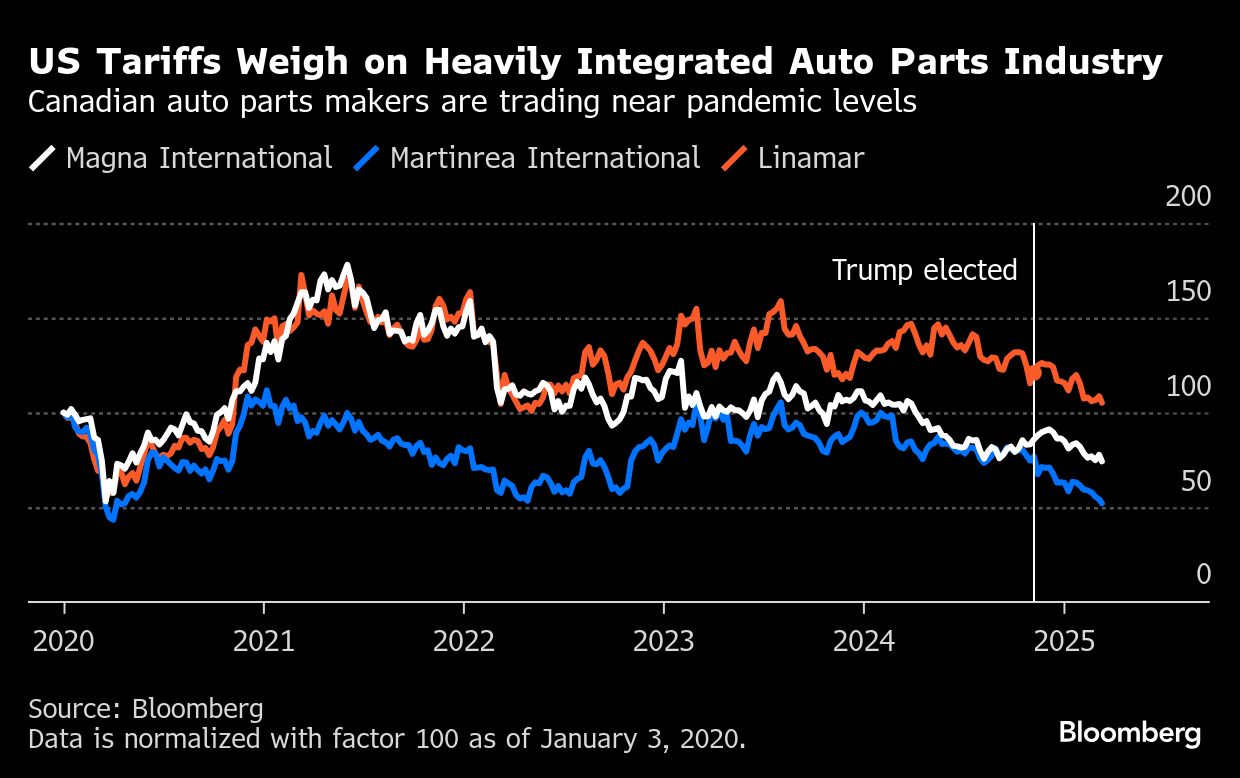
The trade war threatens to upend a highly-interconnected international supply chain that’s been in place for decades. Free trade deals — most recently the U.S.-Mexico-Canada Agreement which Trump signed in 2018 — have made it possible to pass auto parts between the three countries multiple times in the construction of a vehicle. With tariffs and retaliatory tariffs in force, such a cross-border route would rack up levies that stack atop each other several times over.
“The way that we’re integrated now, it means that in only a few days the supply chain can stop functioning,” Francois-Philippe Champagne, Canada’s industry minister, said in French at a press conference Wednesday. In a few days, American factories needing Canadian parts could grind to a halt, he said.
Last week, Linamar’s Executive Chair Linda Hasenfratz told analysts piling metal tariffs on top of auto tariffs would “likely shut the industry down,” costing carmakers billions. But she said the country’s second-largest auto parts maker wouldn’t move any Canadian facilities to the US, calling the rapidly changing tariff policy “short-term tactics” that shouldn’t dictate long-term decisions.
Shares of the big three U.S. automakers, while comfortably above pandemic lows, have sunk since Trump was elected. As of Wednesday’s close General Motors Co. and Stellantis NV are each down 11% while Ford Motor Co. has slumped 9.5% since Nov. 5.
“These companies — most of them — have long-standing commitments to this country,” Champagne said. “We’re going to make sure they abide by the terms of every single agreement we have with them to make sure we protect the jobs.”
Top photo: An employee works on the floor at the Magna International auto parts manufacturing facility in Guelph, Ontario.
- Landmark Supreme Court Ruling Is Upending How America Moves Its Goods
- Car-Seller Copart Among Suitors for Car Insurance Software Firm CCC
- California Lawmakers to Oppose Limits on Insurance Fire Claims
- PepsiCo Scraps Coverage of Weight-Loss Drugs for Employees
- Bodily Injury Is Now A Big Share of Auto Claims Payouts. Is AI to Blame for That Too?
- Ex-Red Lobster Owner Says in Lawsuit Defense That Endless Shrimp Not Its Idea
- Insurer Interest in AI Exclusions Growing as Risk Becomes Omnipresent
- Londoners Find ‘Horrendous’ Cracks in Their Homes After Successive Heat Waves