Bankers Gain a New Route to Huge Payouts From UK Tribunals
Finance-sector workers are about to become the unintended beneficiaries of the U.K.’s Employment Rights Act, a set of trade-union-backed policies primarily designed to strengthen protections for people in low-paying or insecure jobs.
The Labour government will scrap the financial cap on unfair dismissal claims on Jan. 1. Currently, an employment tribunal can award a maximum of £118,223 ($157,780) to an individual who has been wrongfully fired. But many City of London employees earn multiples of that sum in a year, so their lost earnings can’t be fully recovered through a claim over dismissal alone.
Removing the compensation cap is intended to discourage unnecessarily complex lawsuits, the government says, in which claimants allege both unfair dismissal and discrimination with the aim of winning a bigger payout. More complicated cases are often more protracted, weighing on the already overstretched tribunal system.
However, the reform gives well-paid workers a greater incentive to take their former employers to court, according to the government’s own economic analysis of the legislation. While removing the cap is expected to “have a positive, but limited, impact on households,” the analysis notes, some groups “may particularly benefit, such as high-earning employees.”
And aggrieved workers may not be dissuaded from making multi-issue claims and seeking the highest payout they can.
The end of the award cap risks “overloading the employment tribunal system with high-value claims,” said Neil Carberry, chief executive officer of industry body the Recruitment and Employment Confederation, who was involved in government consultations over the Act. “The system is currently on its knees.”
Under Strain
The Employment Rights Act is part of Labour’s New Deal for working people, a key election campaign pledge in 2024. Changes are due to roll out this year and next, with proposed measures that include extending paternity leave, reforming sick pay and providing new protections for workers on zero-hours contracts.
The Act could also increase the number of cases going through arbitration and tribunals by as much as 17%, according to the government’s forecasts.
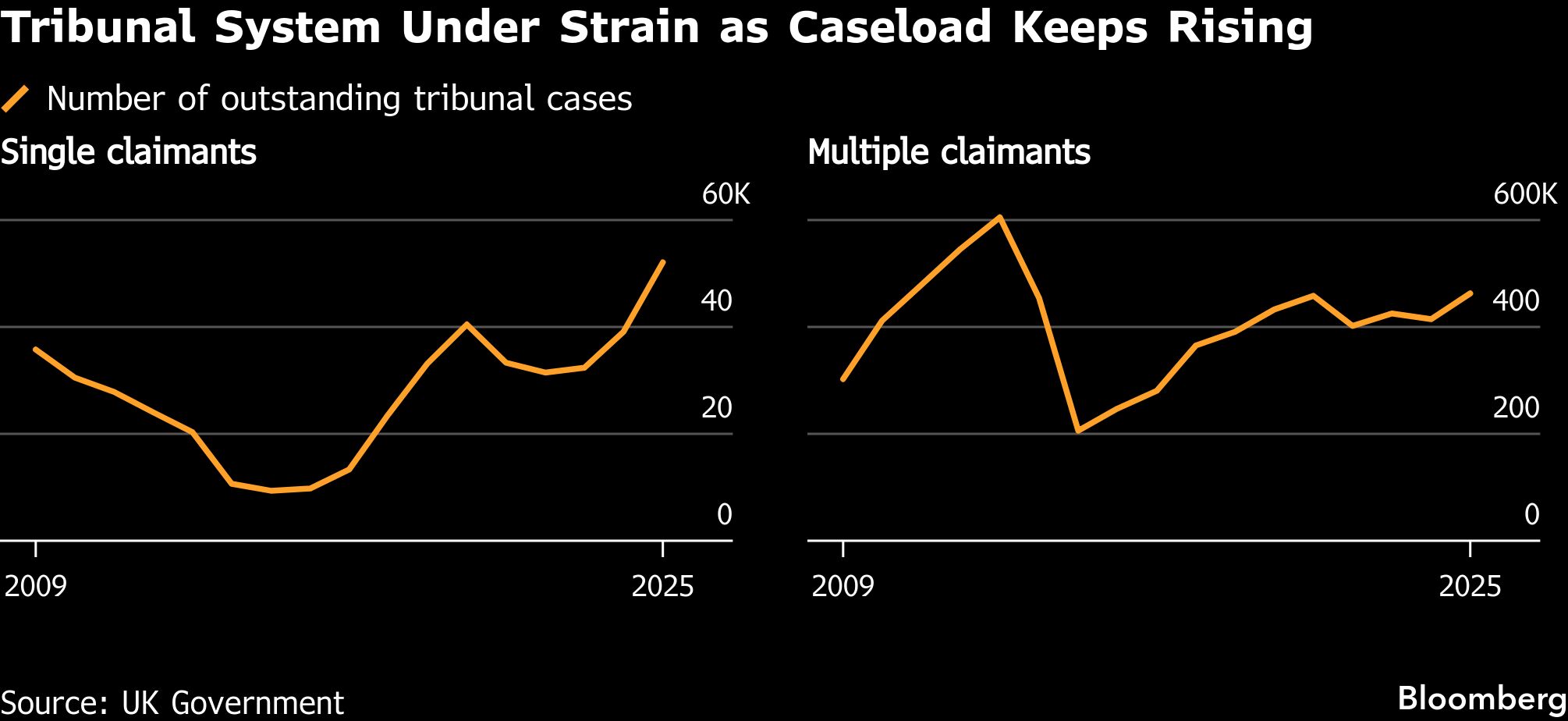
The system is already under enormous strain, with case numbers up and budgets down following the austerity years. More than half a million claims were outstanding in the second quarter of the 2025-26 financial year.
Tribunal System Under Strain as Caseload Keeps Rising
The government has pledged £148.5 million pounds to “repair and modernise” the tribunal estate and a new center opened in London last month.
The REC’s Carberry says that some of the Employment Rights Act’s aims “are moderately sensible, but it tries to do them remarkably badly” and that the legislation was “rushed.” In a LinkedIn post late last year, he noted that business leaders had “anticipated a further discussion about the future of the cash cap” before the government decided to abolish it.
Paying out compensation after a tribunal is less of a concern for employers than the prospect of spending two or three years in litigation and paying legal fees, Carberry said.
According to the Broadcasting, Entertainment, Communications and Theatre Union, some unscrupulous employers may have treated the compensation cap as just another business expense — something they could “price in” when deciding to lay off staff.
“There is now a much better incentive for employers to try to resolve issues rather than dismiss employees unfairly and risk an unfair dismissal claim being made against them,” Kieren Walters, the union’s director of communications and research, said in a blog post.
‘Impunity for Perpetrators’
While tribunals may be stressful and expensive, they are also among the few opportunities UK workers have to publicly air allegations about — and seek reparations for — toxic workplace culture. Bankers have won sizable sums at employment tribunals in recent years over issues ranging from racial discrimination to equal pay, which are not subject to a financial limit.
Sexual harassment and bullying are prevalent within the City of London, a 2024 report by the Treasury Committee found, including serious crimes of sexual assault and rape. “The overarching problem behind all these issues is that of impunity for perpetrators and culture,” the report added.
In 2022, BNP Paribas SA was ordered to pay one of its employees, Stacey Macken, a historic £2 million in an equal pay lawsuit. Macken, a prime brokerage product manager at the time, said during the trial that she had been paid less than male staff in similar roles. On one occasion, she had come into work to find colleagues had placed a witch’s hat on her desk.
Banks, along with other employers, often try to settle with aggrieved staff before cases get to tribunal, preventing sensitive or potentially damaging allegations becoming public knowledge.
A former Goldman Sachs Group Inc. employee sued the bank in 2022 for about £20 million after he was fired for being a whistleblower — a special category in which awards for unfair dismissal are unlimited. The employee, Thomas Doyle, had made allegations about regulatory failures at the bank. He said there was no disciplinary process before he suddenly received an email telling him “he was doomed,” according to documents prepared for the hearing. The case was later dropped and Doyle withdrew his whistleblower claims as part of a settlement.
Big-money cases may draw publicity, but the U.K.’s minister for employment rights, Kate Dearden, expects most awards to be “well below the current cap” even after it is lifted. The median award for unfair dismissal was £6,746 in 2023-24, while fewer than 40 awards were greater than £50,000, according to a government analysis.
“When there is a finding of unfair dismissal, it is crucial that any award is based on compensating the successful claimant fairly for the loss they have suffered and is not about punishing the employer,” she said in an emailed statement. The government has been discussing the impact of uncapping compensation awards with businesses and unions, and plans to publish a summary of their responses before the changes come into force in 2027.
It’s already clear that not everyone agrees the government’s reforms are what the U.K.’s employment tribunals need.
Claire Dawson, a partner at London-based law firm BDBF says the Employment Rights Act risks triggering a flood of complicated unfair dismissal claims from bankers and senior executives looking to claim back bonuses, deferred compensation and loss of company stock.
“There’s a danger that we’re going to be looking at more significant delays,” she said, adding that this would “affect everybody in the tribunal system — all claimants.”
Top photo: Removing the compensation cap gives well-paid workers a greater incentive to take their former employers to court. Illustration: 731 Photographer: Chris Ratcliffe/Bloomberg.