New EVs From Toyota, Subaru Breathe Life into Struggling Market
The reeling market for electric vehicles in the U.S. recently got a boost from a crop of new models, highlighting how some automakers have not yet given up on battery-powered cars.
Toyota Motor Corp. tripled its EV business in the U.S. in the second quarter, thanks in part to the brand’s BZ Woodland and C-HR, both of which hit the market in recent weeks. Subaru Corp. also has two new EVs — the Trailseeker and Uncharted — which helped double the company’s EV sales.
Related: Driving an EV in These US States Saves the Most Money
The recent introductions contributed to the 247,226 battery-powered cars bought by U.S. consumers in the second quarter, a 15% rise compared with the the first three months of the year, when industry sales are typically weakest. And although total volume was still down by more than a fifth from the prior year period, it provides a key glimpse into organic demand for EVs in the U.S. without the aid of federal incentives that have propped up deliveries for years.
“Despite everything that’s gone on, EVs are gaining traction based on their merit,” said Jess Senger, senior research associate at Plug In America, a nonprofit advocacy group.
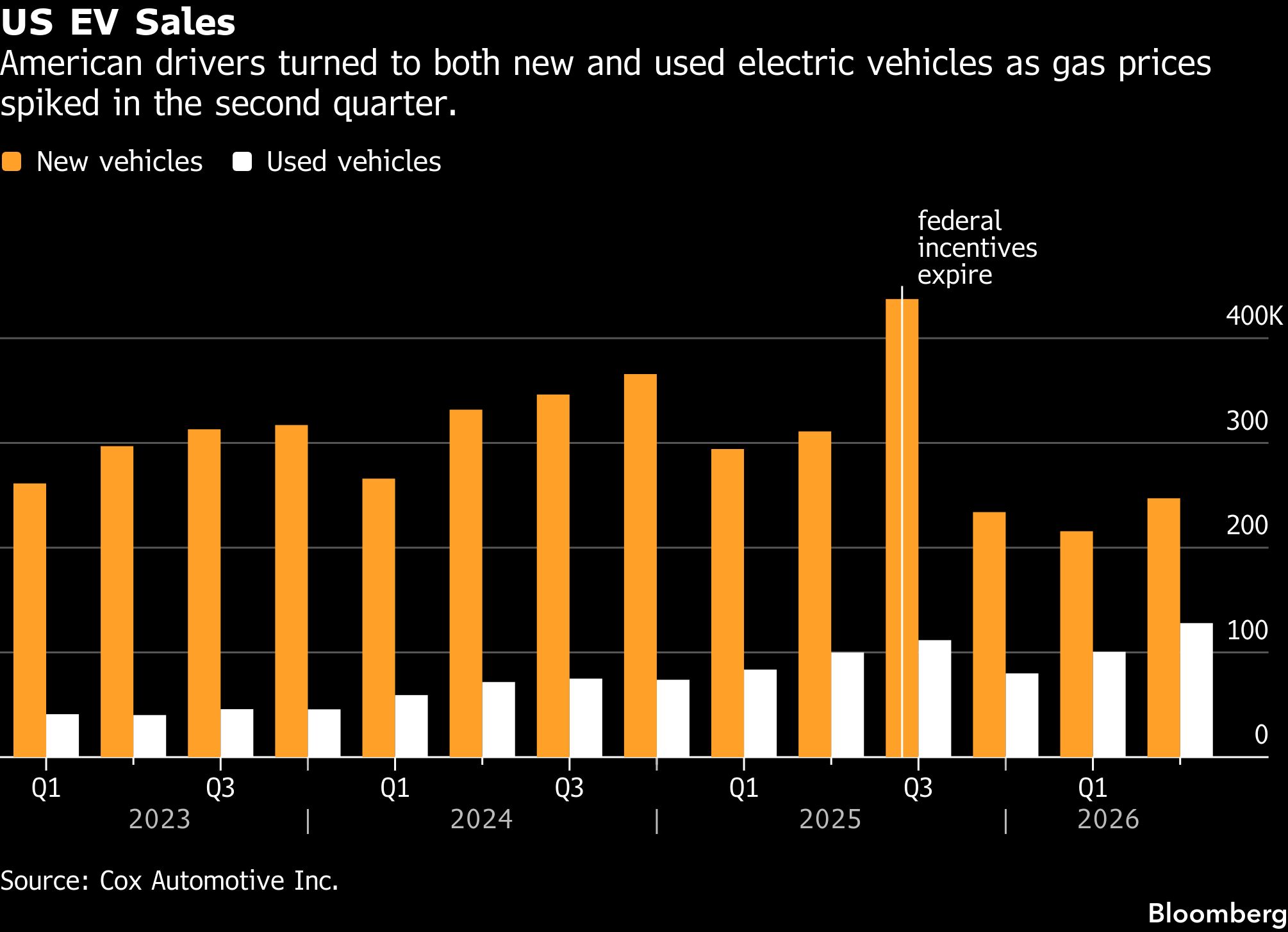
The future of EV sales in the U.S. remains murky. Some analysts expect that without additional incentives the market will founder near its current level. Others, though, think ongoing drama in the gas markets, along with new electric models from Ford Motor Co., Rivian Automotive Inc. and Slate Auto, will further juice sales by year-end.
The share of EV curious drivers has grown since the war in Iran began and there have never been more evangelists for battery-powered cars and trucks. Among EV owners, 95% say their car is cheaper to fuel and maintain than a gas car, according to a recent survey by Plug In America. And in three-quarters of households with both gas and electric cars, the EV is driven more often.
In addition to new models, the EV market was driven by some larger, family-friendly EVs that found new traction. Kia Corp.’s EV9 and the Hyundai Motor Co.’s Ioniq 9 — each with three rows of seats — collectively lured 7,200 buyers in the quarter, more than double the amount that moved in the second quarter of last year.
Nick Nigro, founder of Atlas Public Policy, a Washington, DC-based research firm, said current EV sales would be roughly twice as high if the Trump administration hadn’t killed federal incentives and gutted clean-air regulations. Still, he said the crop of new electric cars comes at a propitious time, perfectly synced with spiking gas prices.
“Geopolitical uncertainty right now is as high as it’s been in 23 years,” he said. “It makes consumers hesitant to make decisions first of all. But if they have to make decisions, they’re going to make one that makes their lives less stressful.”
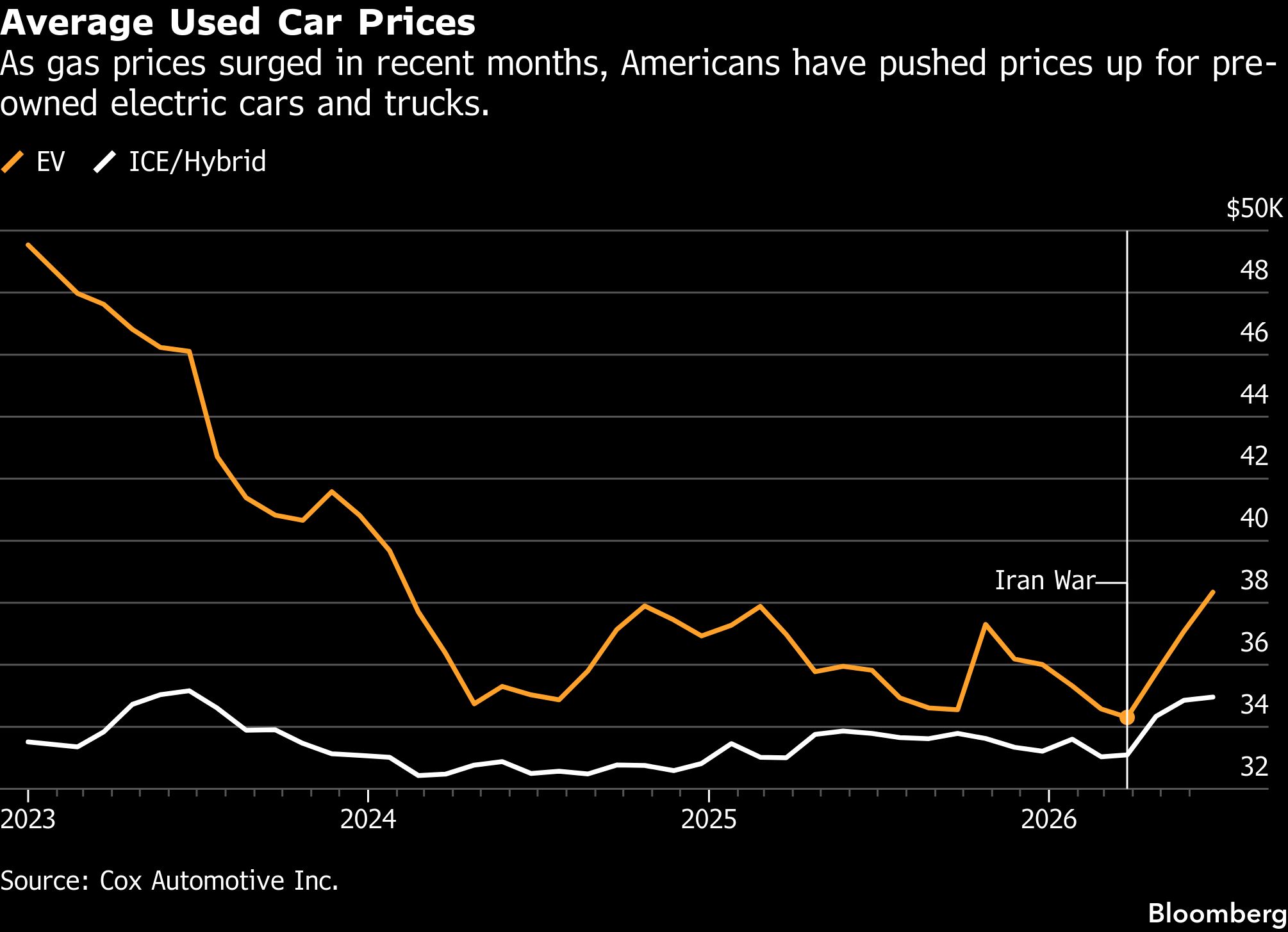
Meanwhile, used EVs remained the hottest slice of the car market in the second quarter, with 22% more transactions than in the year-earlier period. In fact, demand was so hot that used EV prices spiked, reversing brutal depreciation rates that have historically handicapped the market.
Related: Why Toyota RAV4s Are Suddenly the Most Coveted Used Cars in America
Since the war in Iran began, the average transaction price for a used EV in the US has surged 12% to $38,342, double the rise in rates for used gas vehicles, according to Cox.
Still, used EVs on average are only slightly more expensive than gas-powered machines and they tend to be newer models with fewer miles. Nigro, at Atlas, said the maturity of the pre-owned market will further embolden the EV-curious.
“It’s an important barometer in how the consumer looks at EVs,” he explained. “The stereotype of them being for wealthy people, the current moment is putting a knife in the heart of that narrative.”
Top photo: An electric car prepares to park at an EV charging station in Corte Madera, California. Bloomberg.